
Overwintering Pests
- How To Identify Overwintering Pests.
- What type of pests overwinter?
- What Are The Signs Of An Overwintering Pest Infestation?
- How Can I Prevent Overwintering Pests?
- Schedule and appointment
How To Identify Overwintering Pests.
Let’s start with the basics.
In the Midwest, most insects overwinter, meaning they shelter in protected areas to huddle away from frost and snow. As it turns out, the wall voids and attic space of human structures make great overwintering sites for a number of insects.
What type of pests overwinter?
The most common overwintering insects in our area (Michigan, Ohio, Indiana, West Virginia, Kentucky, and Pennsylvania) are:
 Boxelder Bugs
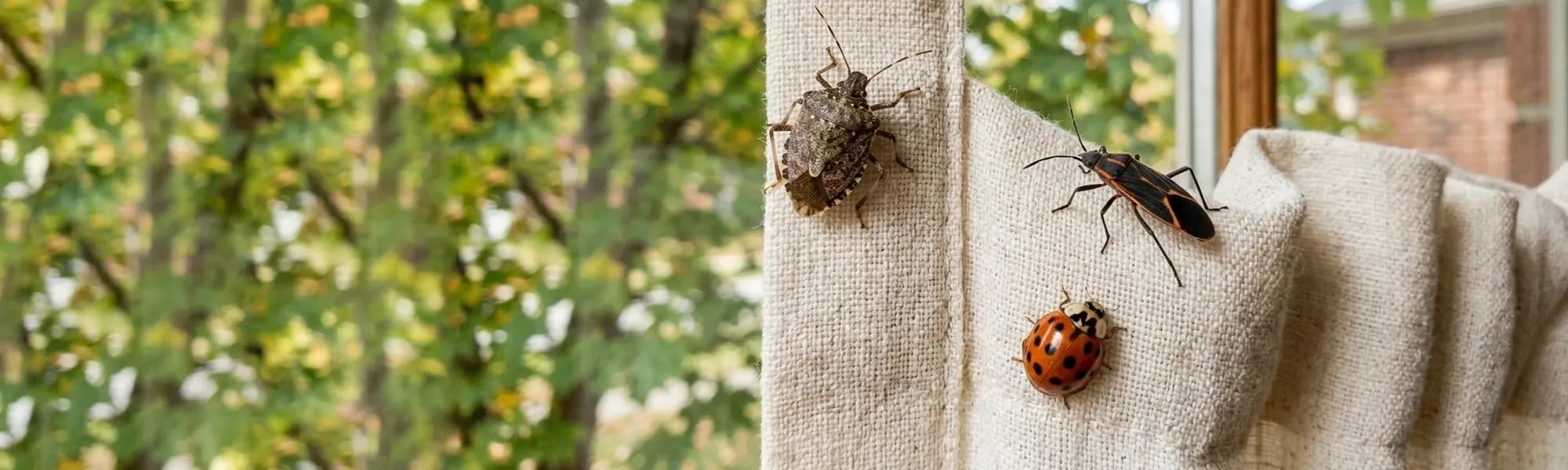
The Boxelder Bug is a minor garden pest during the summer. They feed on the seeds of the boxelder and other maple trees. However, it can become a nuisance in the winter when it takes refuge in homes and other shelters to avoid the cold. About ½” in length, they are black with red markings and can easily slip in through cracks and crevices of homes and other shelters. They won’t sting, bite, transmit disease, or cause physical damage to your home or structure, although they may emit an odor and stain when crushed.
 Multi-colored Asian Lady Bugs (A.K.A. Asian Lady Beetles)
They look just like the native Lady Bug to the untrained eye, but their habits are anything but lady-like. Asian Lady Beetles will find their way into homes or structures to take refuge in. These overwintering pests have been known to bite, emit a foul odor when crushed, and taste absolutely terrible … or so we’ve been told.
 Cluster Flies
 naturally live their entire life cycle outdoors. Unlike any other flies, Cluster flies originate as a parasite within an earthworm. Once the larvae emerge, their life cycle continues outdoors, away from the earthworm. Once colder temperatures arrive, the Cluster Fly will seek shelter away from the elements, including clustering together behind loose tree bark, wood planks, or in buildings and homes. Hence the name “Cluster” fly. If they happen to be in your house when it’s warmed by the sun, you could see them appear in your living areas. At this point, it’s too late to do anything about it, except clean up the mess.
 Leaf-footed Pine Seed Bugs
This native outdoor pest produces just one new generation each year. The adults are about 3/4” long and dull-brownish in color. During the summer, they feed on pine cones and their seeds. When the cold winter sets in, the adults will naturally take shelter. Their first choice is to huddle under the bark of pine and conifer trees; however, they have been known to enter structures through small gaps and openings. When their shelter is warmed by the sun in the winter, these pests can suddenly appear in large numbers. Due to their larger size, this can be a shocking sight. So just remember, this is a nuisance pest that doesn’t sting, bite, or cause damage to structures. But they do need to be cleaned up.
 Brown Marmorated Stink Bugs (BMSB), A.K.A. the new kid in town
The adult brown marmorated stink bugs are about ½” in length and shaped like a shield. They’re named after their appearance, which is brown with a marbled pattern (marmorated). These bugs were recently introduced to the US from Asia and have been a growing nuisance in the Mid-Atlantic States in recent years. During the summer months, the BMSB prefers to feed on vegetable crops, fruit trees, and some ornamental plants, which is a cause for concern as they can destroy an entire crop. The BMSB will take refuge in homes or other nearby structures during the colder months and accidentally appear indoors when the sun warms their winter habitat. Because of their size and the nasty odor they emit when crushed or stressed, they make their presence known. The best way to eliminate this pest once it’s inside is to vacuum and empty the bag immediately afterward.
What Are The Signs Of An Overwintering Pest Infestation?
Overwintering pests usually come out in the spring or during warm spells in the winter. When the sun (or your HVAC system) warms your home's voids, pests become active, assuming the worst of winter is over, and you’ll see them start to emerge indoors. They enter living rooms, bedrooms, and kitchens through little cracks and crevices in the floors, walls, and ceilings. Their indoor appearance is accidental, as they are really trying to get back outside. But some get confused and head further into the structure instead. If you see stink bugs, Asian lady beetles, cluster flies, boxelder bugs, or pine seed bugs in the spring, chances are you have an overwintering pest problem.
How Can I Prevent Overwintering Pests?
The best way to take care of an overwintering pest problem is to prevent overwintering pests from entering your house in the fall.
The first step is to identify openings, gaps, and other entry points pests use to get into your house. While sealing insects completely out may not be realistic, every little bit helps. In fact, with a little effort, you can make a big difference in the number of uninvited pests and rodents you entertain this winter.

Screen openings, seal gaps & crevices and other small entry sites
- When you eliminate entry points, pests won’t have easy access to your structure.
- This increases your chance of having a pest-free home over the winter
Protective exterior barrier treatment
- This residual exterior treatment will add to the success of your insect exclusion efforts.
- Professional treatments utilize industrial-strength products which are formulated specifically to eliminate pest infestations.
- These products have a longer residual life than similar over-the-counter products do.
The most common points of entry for overwintering pests are:
Bricks and Mortar Joints.
The joint between two bricks is generally a little lower than the face of the bricks and will create a gap when straight elements of construction lay across it (such as siding and molding). Here you can see a slim crack along the line of bricks where insects enter your home. Also, notice the gap under the steel plate that overtops the door. These gaps should be closed with a sealant.

Underneath Window Frames.
Most window frames are carefully caulked and sealed on the top and sides to keep out water, but the underside may not be caulked at all, allowing an easy point of entry for insects and spiders.

Fascia Boards over Wooden Clapboard.
The uneven surface of the clapboard creates a gap in every board. These gaps can be caulked, but it may be easier to stuff them with foam insulating cord.

Soffit and Attic Vents.
Be sure attic and soffit vents are backed with a screen if they aren’t already. If they are, check to make sure there are no holes, tears or gaps in the screen where bugs, bats, and rodents can squeeze in.

Utility openings.
Anywhere there is a hole for vents, pipes, cables, and such, the opening should be sealed shut. Bugs can find their way into even the smallest openings. This can be done several ways, but stuffing gaps with flexible, breathable material is best. An old green pot scrubber works wonderfully to seal insects out, and it won’t rust away. A new scrubber will work too, but pre-used scrubbers are much more flexible.
Of course, the easiest way to keep bugs, pests, and rodents out this winter is to call Rose Pest Solutions. An inspection in the fall can go a long way towards keeping pests and mice out of your home or business this winter.
What Do I Use To Seal Up My House To Keep Pests Out?
Exclusion Materials
In the pest control business, we call materials used to prevent pests from entering your home “exclusion materials”. These commonly available pest-proofing products not only help prevent overwintering pests, but they’re also a simple way to keep year-round nuisance critters like mice and bats out of your home or business.
Use the Right Material for the Right Surfaces!
- Caulks for joints that won’t see movement (e.g., brick)
- Sealants for joints that may vary in width over the seasons (e.g., aluminum and wood)
Other Exclusion Materials Include:
- Foam insulation is flexible and can stuff long gaps. Note that foam from a can is convenient, but hard to remove once it is in place
- Aluminum screening is inexpensive, long-lasting, and can be rolled up or twisted to fit different-sized areas
- Hardware cloth acts like a heavy-duty screen
- Pot scrubbers, especially used ones, fit nicely into small gaps
If you need help pest-proofing your home this fall, call Rose Pest Solutions to schedule an inspection.
Schedule and appointment
In many cases, we can respond within 24-48 hours.