
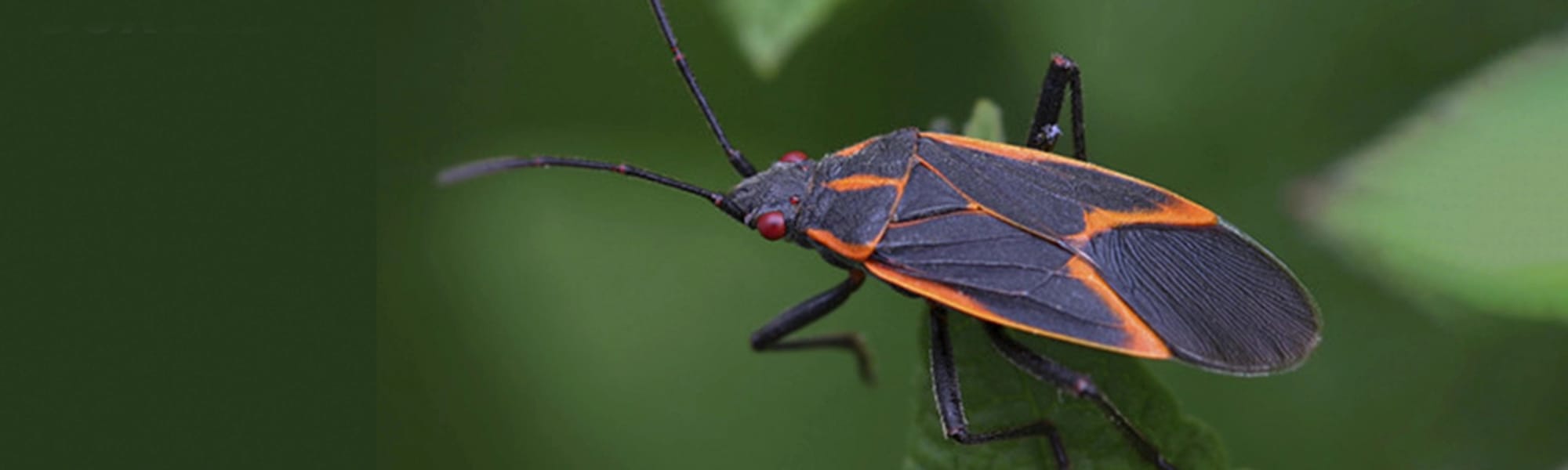
How To Identify Box Elder Bugs
What Are Boxelder Bugs And Why Do I Have Them? | with Entomologist "Shep"
Boxelder bugs start the year harmlessly outside on your maple trees, but they quickly become a frustrating nuisance as the weather cools! Shep breaks down how to identify these common insects, what they feed on, and why they suddenly seem to appear inside your home in massive swarms.
What You’ll Learn in This Video:
What are boxelder bugs?
How to spot these half-inch-long, red and black insects and why their flat-folding wings classify them as "true bugs."
Where do boxelder bugs come from?
Discover where they live—from their namesake boxelder trees (a type of maple) to a variety of other trees.
Why do I have boxelder bugs in my house?
Why are these insects called overwintering pests and suddenly gain major "pest status" as summer ends? Learn how they manage to enter buildings and homes in huge numbers to escape the winter cold and emerge in the spring.
How do I get rid of boxelder bugs and other overwintering pests?
The time to prevent and treat for boxelder bugs is in the fall. The best boxelder bug pest control starts with understanding their habits and sealing up your home before fall temperatures drop.
Transcript: What Are Box Elder Bugs?
Box elder bugs are red and black insects that hold their wings flat across their backs. They belong to the group that's known as true bugs.
They feed by sucking the juices of tree leaves and fruits, maple trees, and a wide variety of other trees as well. Their preferred tree is a boxelder, which is a type of maple. An adult boxelder bug is about a half inch long.
They can generate huge numbers in the spring and early summer, but they gain pest status as overwintering pests. They can enter buildings in huge numbers as the summer ends.